Home >> Oaxaca >> Oaxaca, Oaxaca >> Zócalo

The Zócalo

Historic center of Oaxaca and a UNESCO World Heritage Site

GPS: 17°3.38'N 96°43.90'W

Click for city map
City Map
Main Index
More Photos
Oaxaca, Oaxaca
Climate & Weather
Burger King on M. Alcalá
Oaxaca Teachers' Strike 2006
Christmas in Oaxaca
An August Day in Oaxaca
Please Stop Rocking The Bus (Essay)
Telephone Calls
Transportation
Weather
Visitors' Comments
AboutHomeSearch


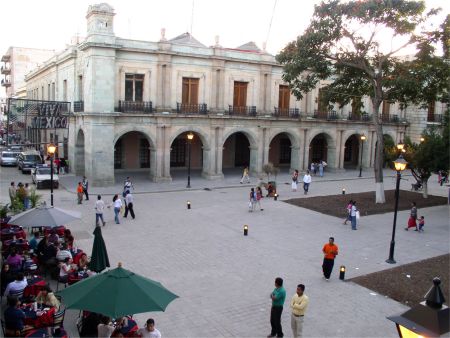
Oaxaca zócalo October 2005, taken from Restaurante Altos Teranova. I believe this is the area that lost the tree. The government building in the background is undergoing renovation and will no longer house goverment offices. It is rumored that the building will become a government-operated hotel.
The zócalo (main square) is the heart of the city and has been so since 1529. On the south side of the zócalo is the building that formerly housed state offices (with plans to convert to a museum); on the north side is the Cathedral of Oaxaca which dates from 1535. The zócalo is a place to meet, to relax, get a shoeshine, or enjoy a musical performance. A number of cafes surround the zócalo and sitting at a sidewalk table and watching the activities in the square is a popular pastime. See also this article about the zócalo by Stan Gotlieb.

The zócalo is also the site of frequent political rallies and protests. Visitors should achieve an awareness of any current event since there may be strong feelings, even a possibility of danger, associated with these protests. One of the largest and more potentially volatile events is the annual Oaxaca Teachers' Union gathering. The Sindicato Nacional de Trabajadores de la Educación (SNTE) has been accused of encouraging the 1996 EPR attack in which 3 police, 2 sailors, 2 guerrillas, and 2 civilians were killed in an assault rifle and machine gun attack on government establishments in the resort town of Huatulco, Oaxaca.

April 2005:   The zócalo is undergoing some renovation. Apparently due to the operation of some heavy machinery, one of the large Indian Laurel trees became uprooted and fell against the Government Palace. See http://www.planeta.com/ecotravel/mexico/oaxaca/oaxacacityzocalo.html for more on the story and see http://www.flickr.com/photos/planeta/sets/512530/

After the tree fell, there was strong public outcry against the project, with the opposition citing inadequate public involvement in the planning as well as greater needs in other parts of the city such as repair of the deteriorating market and the city's water system.

August 2005:   The zócalo renovation is nearing completion. New paving and landscaping are in place albeit with somewhat less shade than before.

October 2005:   I visited the zócalo and found a small area of paving still in progress at the north end. Otherwise the work seems to be complete. There are four fountains, new paving stones, newly planted trees, refurbished central performance area, and raised flower beds. The zócalo is still quite shady despite the loss of one of the large trees and seems ready to continue to count the centuries.

July 2006:   The zócalo has the color and vibrancy that we haven't seen in two years. Two years ago before its renovation, vendors were allowed to ply their goods all over, and the color and pageantry was magnificent. A year ago, in conjunction with the completion of the renovation, government dictated that no longer could vendors stroll the zócalo, thereby destroying much of the allure of the downtown core. Now that most of the teachers have returned to class at least temporarily, and the police are staying clear of the zócalo for fear of instigating another incident [the 2006 teachers' strike was particularly tense - tomzap], the vendors have wisely seized the opportunity to return to the zócalo. While there are still many tarps up, with quiet protesting, it's not all that different than the zócalo to which we have been accustomed for generations....protesters in support of one cause or another. For the first time in two months, my wife, daughter and I today had lunch in the zócalo. The restaurants and cafés were once again lively and booming with tourists, vendors...and some protesters which did no more than add to the uniqueness and magic of the city. [Alvin Starkman, Casa Machaya]


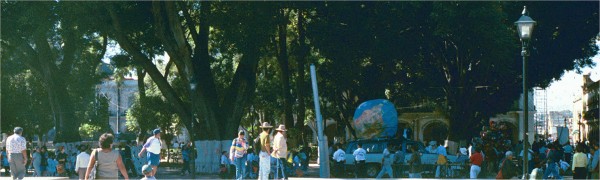
A children's parade marches through the zócalo. The blue globe is the earth.


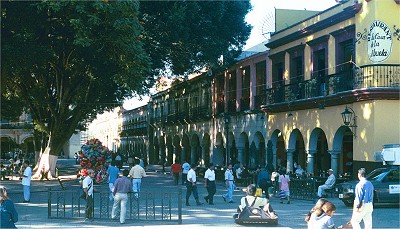
Zócalo, west side
McDonalds wanted to add its arches to those of the zócalo by establishing one of its fast-food restaurants here. This topic divided the community between those who felt the presence of the fast food chain would compromise the preservation of the historic square and those who felt that the admission of a foreign business would strengthen the Oaxacan economy and provide jobs for its citizens. The opposition was led by Mexico's most famous living artist, Francisco Toledo. One poster pictured McDonald's golden arches spreading across the nearby archaeological site, Monte Albán. Actually, I think the city has rules about signs--they are all modest in size to the point of making it somewhat difficult to locate businesses. But it preserves the ambiance as seen in the photo at left where numerous businesses are located behind these arches. In December 2002, the city decided to prohibit McDonalds from adding its arches to the zócalo.

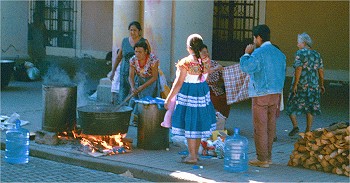
These people are in front of the state government building preparing a large meal for a group of farmers who have gathered in a different location for a meeting and protest. The vat on the fire contains beans while the tall canister at left has coffee.

More Photos

 
Cooking on the sidewalk in front of the government building


| Top of page | Main index | Search | What's new |
The Pacific Coast of Mexico www.tomzap.com Tom Penick:   tom@tomzap.com